
UPS Battery Guide
UPS Maintenance Planning for Server Rooms and IT Rooms
A practical UPS maintenance guide for IT service providers and server room operators reviewing battery health, runtime, load changes and replacement planning.
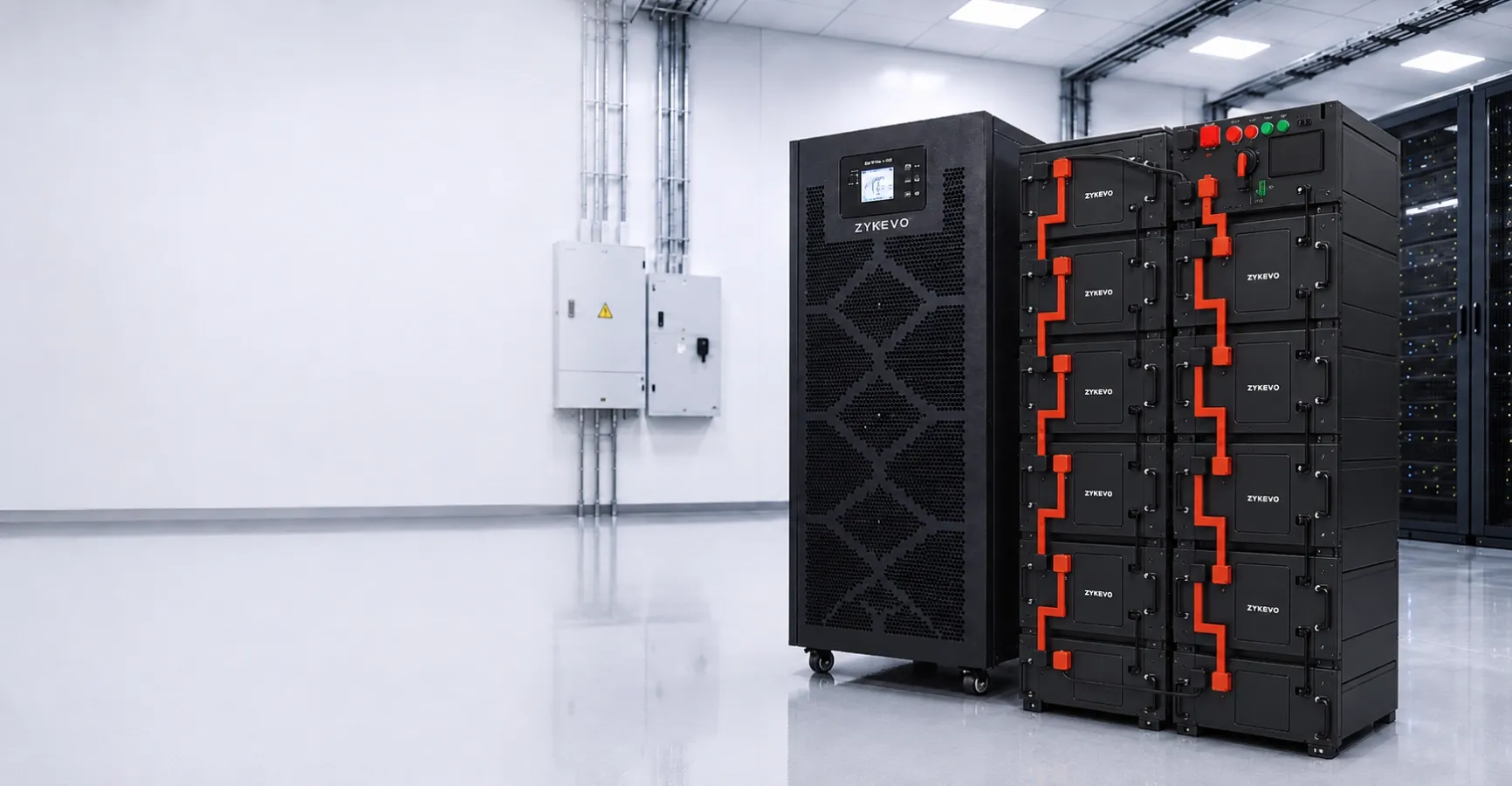
UPS Maintenance Planning for Server Rooms and IT Rooms
A UPS system may look normal during daily operation, but battery ageing, load changes, dust, heat and weak grid conditions can reduce the actual backup time long before a failure becomes obvious. For server rooms, IT rooms and small data centers, a simple maintenance plan helps service teams find these risks early and decide whether the project needs battery replacement, an external battery cabinet, a lithium retrofit or a full UPS upgrade.
This guide is written for regional IT service providers, UPS maintenance companies and backup power solution teams that support business customers with practical UPS projects.
Why UPS Maintenance Planning Matters
UPS maintenance is not only about checking whether the UPS is still powered on. The real question is whether the complete backup power system can still support the connected load for the required runtime when utility power fails.
A maintenance review should help answer five questions:
- Is the UPS capacity still suitable for the real load?
- Are the batteries still healthy enough to provide the required backup time?
- Has the site added servers, network equipment or security systems since the UPS was installed?
- Are temperature, dust, airflow and wiring conditions acceptable?
- Is battery replacement enough, or should the UPS system be upgraded?
What to Check During Routine UPS Maintenance
For most server room and IT room projects, the maintenance checklist should include both the UPS host and the battery system.
Key UPS checks include:
- Input and output voltage status
- Load percentage and load balance
- Alarm history and event records
- Bypass status
- Fan condition and airflow
- Dust level and cabinet temperature
- Cable connection condition
- Communication card or monitoring status
- UPS parameter settings when available
Key battery checks include:
- Battery age and installation date
- Battery cabinet temperature
- Visible swelling, leakage or terminal corrosion
- Battery string voltage
- Individual block voltage where possible
- Runtime test result if site conditions allow
- Battery breaker, fuse and cable condition
- Whether the battery capacity still matches the customer's backup time requirement
Battery Health and Runtime Are Usually the First Risks
In many UPS projects, the UPS host can continue operating for years, while batteries lose capacity much earlier. A system that once supported 30 minutes of backup time may only provide a few minutes after several years of use.
This is why battery replacement planning should not wait until the UPS gives a final battery fault alarm. For service companies, it is better to review battery condition, runtime requirement and replacement options during regular maintenance.
Common battery-related project opportunities include:
- Replacing ageing lead-acid battery strings
- Adding an external battery cabinet for longer runtime
- Reviewing whether a high-voltage lithium battery system is suitable
- Matching UPS DC voltage with a new battery configuration
- Recalculating backup time based on the real load
When Battery Replacement May Be Enough
Battery replacement can be a practical choice when the UPS host is still stable, the capacity is still suitable and the site only needs to restore the original backup time.
Battery replacement is usually worth reviewing when:
- The UPS has no major fault history
- The load has not increased beyond the UPS capacity
- The site is satisfied with the existing UPS topology
- The customer wants to reduce immediate project cost
- The battery string voltage and cabinet arrangement are clear
When to Consider Lead-Acid to Lithium Retrofit
A lithium retrofit may be considered when the customer wants longer service life, reduced battery footprint or lower maintenance frequency. However, high-voltage lithium batteries must be matched with compatible UPS systems. They should not be treated as a universal drop-in replacement without technical review.
Before recommending lithium retrofit, check:
- UPS DC bus voltage and charging voltage window
- Existing battery string design
- Required backup time and real load
- Battery room or cabinet space
- Communication and protection requirements
- Site installation conditions
- Whether the project needs 192V, 384V, 512V or a custom high-voltage configuration
ZYKEVO positions high-voltage lithium batteries as UPS battery solutions for compatible backup power systems, not as household energy storage or grid-scale BESS products.
When Full UPS Replacement Should Be Reviewed
Sometimes battery replacement is not enough. A full UPS replacement may be more practical when the UPS host is old, overloaded, difficult to maintain or no longer suitable for the application.
UPS replacement should be reviewed when:
- The UPS frequently reports alarms or transfer faults
- The current UPS capacity is too small for the real load
- Spare parts are difficult to obtain
- The site needs better efficiency or monitoring
- The project requires a different input or output phase configuration
- Weak grid or generator conditions are causing repeated issues
- The customer wants to redesign the backup power system instead of only changing batteries
Information to Collect Before Quotation
A clear maintenance report helps the supplier and service team recommend the right next step.
Useful information includes:
- Current UPS brand, model and capacity
- Input and output phase configuration
- DC battery voltage
- Battery quantity and battery capacity
- Existing battery age
- Real load in kW or load percentage
- Required backup time
- Site temperature and installation environment
- Photos of UPS nameplate, battery cabinet and battery wiring
- Any alarm messages or service history
- Whether the customer prefers lead-acid replacement or lithium retrofit
How ZYKEVO Can Support Service Companies
ZYKEVO can support UPS maintenance and upgrade projects with UPS selection, battery configuration review and practical project communication. The product scope includes offline UPS, single phase online UPS, three phase high frequency online UPS, three phase low frequency UPS, external battery cabinets and high-voltage lithium battery systems for compatible UPS projects.
Planning a UPS maintenance or battery replacement project?
Send the UPS model, DC voltage, real load, required backup time and site photos. ZYKEVO can help review whether the project is better suited for battery replacement, external battery cabinet, lithium retrofit or full UPS replacement.