
ups-technical-knowledge
kVA vs kW: Why Power Factor Decides How Much Load Your UPS Actually Carries
A 10kVA UPS is not always a 10kW UPS. Output power factor decides the real capacity you can load - and it explains most sizing surprises when replacing old units.
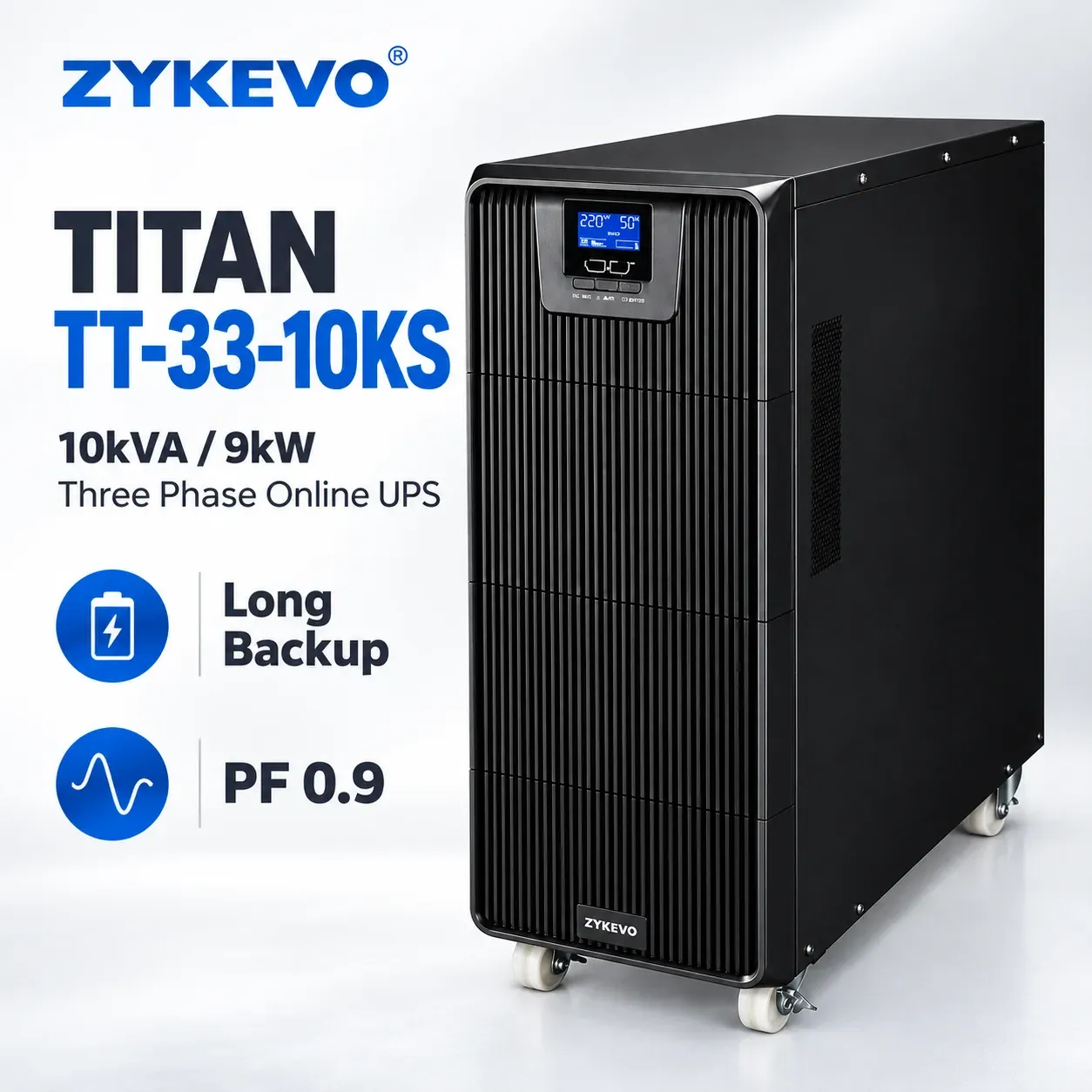
The most common sizing mistake in UPS procurement: assuming kVA equals kW. It does not. The difference - output power factor - decides how many watts a UPS can actually deliver, and it explains why a new 10kVA unit sometimes replaces an old 15kVA one, or fails to.
The Simple Math
Real power in watts equals apparent power in volt-amperes multiplied by power factor: W = VA x PF. A 10kVA UPS at PF 0.9 delivers 9,000W. At PF 1.0 it delivers the full 10,000W. Your servers, switches and monitors draw watts - so the watt number, not the VA number, is what your load actually consumes.
Why Old Units Feel Smaller
UPS hardware from the 2000s often ran PF 0.7 or 0.8: a legacy 10kVA unit carries only 7,000-8,000W. Modern high-frequency machines deliver more real power from the same VA rating - ZYKEVO ATLAS RACK and PT single-phase units run PF 1.0 (kVA equals kW), while the ATLAS-HF series runs PF 0.9. When replacing an old unit, always compare watts to watts, or you will oversize or undersize the new machine.
How to Size Correctly in Three Steps
First, add up the actual watt draw of your load - read the power supply labels or, better, measure with a power meter at the distribution strip. Second, apply headroom of 20-30% so the UPS does not run at 100% and batteries get a stable charging margin. Third, check the watt rating of the candidate UPS (VA x PF) against that number, not the VA rating on the front panel.
Example: measured load 7,200W. With 25% headroom the target is 9,000W. A 10kVA PF 0.9 unit (9,000W) exactly meets it with zero margin for growth; a 10kVA PF 1.0 unit carries 10,000W and leaves growing room. That single line on the datasheet changes the purchase.
What to Ask Your Supplier
Ask for output power factor at the specific model you are buying, the watt rating, and the crest factor for non-linear loads (ZYKEVO PT-class single-phase units specify 3:1). Suppliers who answer in watts before VA are the ones who will not disappear after delivery.