
Jul 23, 2026UPS Battery Guide
How to Plan UPS Battery Runtime for Long Backup Time Projects
A practical guide for UPS service companies and project buyers planning long-runtime UPS battery configurations for server rooms, IT rooms and backup power projects.
How to Plan UPS Battery Runtime for Long Backup Time Projects
UPS runtime is one of the most important parts of a backup power project. A UPS with the correct kVA rating may still fail the project if the battery system cannot support the required backup time.
For small server rooms, IT rooms, network equipment rooms, security systems and industrial control loads, customers often ask for longer backup time than a standard internal battery UPS can provide. In these cases, the project may need external battery cabinets, larger lead-acid battery banks or compatible UPS lithium battery systems.
This article explains what information is needed before planning a long-runtime UPS battery configuration.
Key Information Needed Before Planning UPS Runtime
Before selecting a long-runtime UPS battery configuration, the project should confirm several basic details. Runtime cannot be calculated only from the UPS model name or the battery cabinet size.
- UPS capacity and model
Confirm the UPS brand, model, rated capacity and whether it is a single phase or three phase UPS. If the project is a new installation, confirm the expected UPS capacity in kVA and the required output voltage.
- Real load in kW
The most important value is the real load, not only the UPS kVA rating. A 10kVA UPS may support different backup times depending on whether the real load is 3kW, 5kW or 8kW.
- Required backup time
Confirm whether the customer needs 10 minutes, 30 minutes, 1 hour, 2 hours or longer runtime. Long backup time usually requires external battery cabinets or a larger battery system.
- UPS DC voltage
The battery voltage must match the UPS DC bus requirement. Common UPS battery systems may use different DC voltage platforms depending on the UPS capacity and design. For lithium battery retrofit projects, this point must be checked before quotation.
- Battery type preference
Some projects still use lead-acid batteries because of budget or replacement habits. Other projects may consider lithium batteries to reduce footprint, weight and maintenance frequency. The battery choice should match the site condition and service capability.
- Installation space
Battery cabinets need enough installation space, ventilation and maintenance access. For small IT rooms or server rooms, space limitation is often one of the main reasons to review lithium battery options.
- Site power condition
Weak grid, generator input, unstable voltage or poor installation environment can affect UPS and battery selection. These conditions should be shared before the battery system is planned.
How Different Runtime Targets Affect Battery Selection
Different runtime targets usually lead to different battery planning directions. The final configuration still depends on the real load, UPS DC voltage, charger specification and available installation space.
Short runtime: 5-15 minutes
For many IT loads, 5-15 minutes of backup time is enough for safe shutdown, generator start-up or short utility interruptions. Some UPS models can support this with internal batteries, while larger systems may still need a small external battery cabinet.
Medium runtime: 30-60 minutes
When the customer needs 30-60 minutes of backup time, external battery cabinets are often reviewed. This type of project is common for server rooms, network equipment rooms, security systems and small data center support areas.
Long runtime: 1-4 hours
Longer backup time normally requires a larger battery system. Lead-acid batteries can still be used, but the footprint, weight, maintenance and replacement cycle should be considered. For selected UPS projects, lithium battery systems may be reviewed to reduce space and maintenance requirements.
Very long runtime or limited space
If the customer needs long backup time but has limited battery room space, UPS lithium battery systems may be a practical option. The UPS DC voltage, BMS communication, charger current and protection logic must be checked before quotation.
Existing UPS battery replacement
For an existing UPS system, the first step is not choosing the battery brand. The first step is confirming the UPS DC voltage, battery string structure, charger behavior and real load. After that, the project can compare lead-acid replacement, external battery cabinet expansion or lithium retrofit.
Lead-Acid Battery Cabinets vs UPS Lithium Battery Systems
For long-runtime UPS projects, the battery system is usually planned in two main directions: lead-acid battery cabinets or compatible UPS lithium battery systems. Both options can be used, but they fit different project conditions.
Lead-acid battery cabinets
Lead-acid batteries are still common in UPS projects because many service teams are familiar with them. They are often used for standard UPS replacement, budget-sensitive projects and sites where the customer already has existing battery cabinets.
The main points to check are battery quantity, cabinet size, floor loading, ventilation, maintenance access and future replacement cost. For long backup time, lead-acid battery banks may require more space and more regular maintenance.
UPS lithium battery systems
UPS lithium battery systems may be reviewed when the project needs longer runtime, smaller footprint, lower maintenance frequency or battery upgrade from an existing lead-acid system.
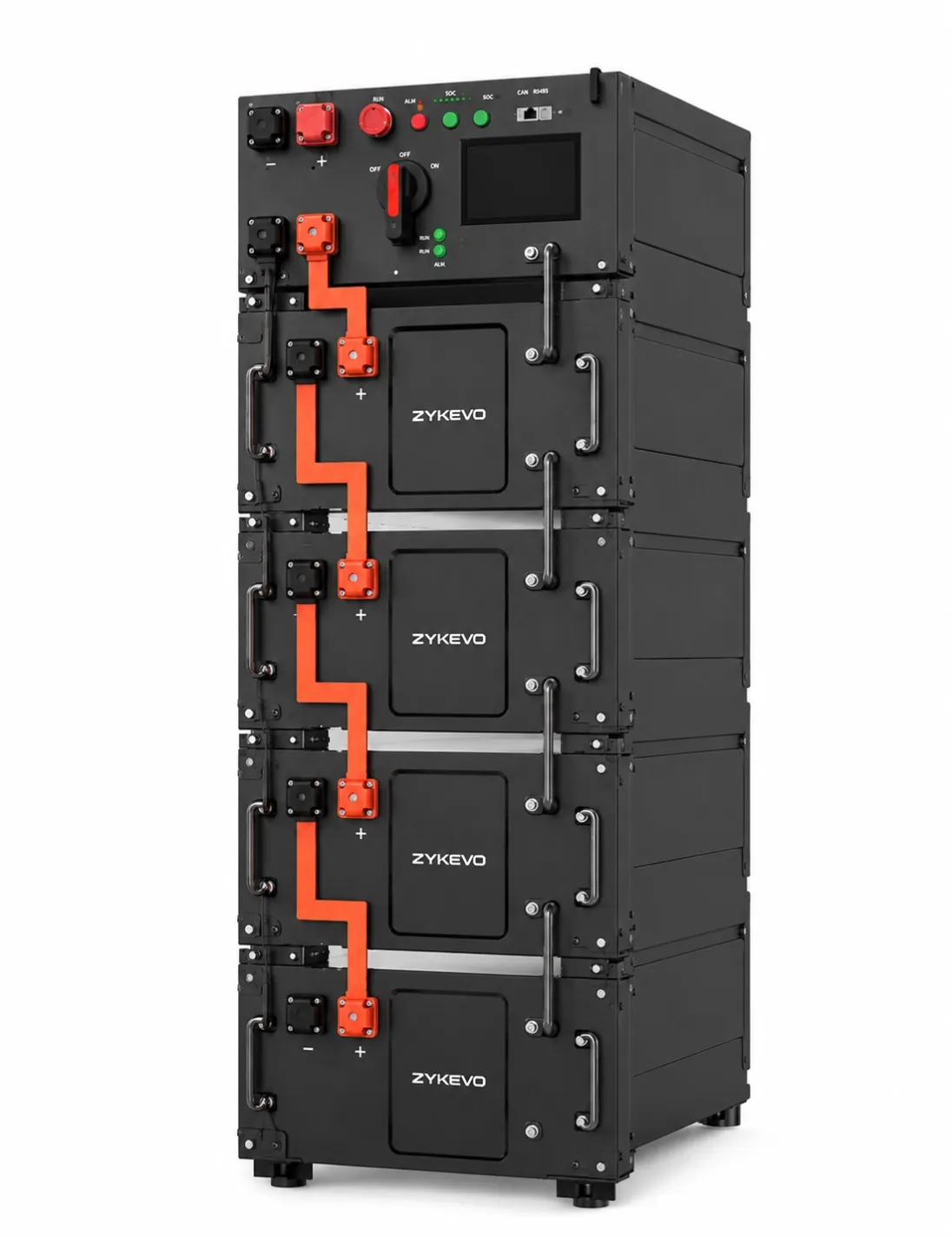
For ZYKEVO projects, lithium battery systems should be positioned as UPS companion battery systems, not as home storage or grid-scale BESS products. The battery configuration must match the UPS DC voltage, charger current, protection logic and communication requirements.
When lithium battery makes more sense
Lithium battery systems may be suitable when:
The site has limited battery room space.
The customer wants to reduce battery maintenance work.
The project needs longer backup time with a more compact battery system.
The existing UPS battery bank is aging and the customer wants to review a lithium retrofit.
The UPS DC voltage and charger specification can support a compatible lithium battery configuration.
When lead-acid may still be suitable
Lead-acid batteries may still be suitable when:
The project budget is the main decision factor.
The required runtime is short or moderate.
The customer already has usable battery cabinets.
The local service team prefers a familiar battery replacement method.
The UPS lithium compatibility cannot be confirmed.
Common Mistakes in UPS Runtime Planning
Mistake 1: Planning runtime from UPS kVA only
UPS kVA does not directly tell the backup time. Runtime depends on the real load in kW, battery capacity, UPS efficiency, battery condition, temperature and discharge settings.
Mistake 2: Ignoring UPS DC voltage
The battery system must match the UPS DC voltage requirement. This is especially important for external battery cabinets and lithium battery retrofit projects.
Mistake 3: Underestimating battery room space
Long-runtime UPS projects may need more battery space than expected. Cabinet size, floor loading, ventilation and service access should be checked early.
Mistake 4: Choosing lithium battery without compatibility review
UPS lithium battery systems are not universal plug-in replacements. UPS charger behavior, protection logic, communication and voltage range must be confirmed before quotation.
Mistake 5: Forgetting future battery maintenance
The project should consider not only the first purchase cost, but also replacement cycle, maintenance work, site access and long-term service responsibility.
How ZYKEVO Supports Long-Runtime UPS Projects
ZYKEVO can support UPS service companies, IT room service providers and backup power project partners with UPS selection, external battery cabinet matching and compatible high-voltage lithium battery review.
For new UPS projects, ZYKEVO can help review the UPS capacity, input/output requirement, battery voltage and expected backup time.
For existing UPS systems, ZYKEVO can help review whether lead-acid battery replacement, battery cabinet expansion or lithium battery retrofit is more suitable.
Send Your UPS Runtime Requirement
To discuss a long-runtime UPS project, send the UPS model, UPS capacity, DC voltage, real load in kW, required backup time, battery type preference and available installation space. ZYKEVO can help check the possible UPS and battery configuration direction before quotation.